Medical Facts
Neurovascular diseases affect the blood vessels of the brain and spinal cord.
They include primary vascular disorders, such as brain arteriovenous malformations and intracranial aneurysms, and major clinical syndromes such as stroke. Vascular complications may also occur during the treatment of complex neurosurgical diseases, especially brain tumors and skull base tumors.
For this reason, modern neurosurgery requires not only anatomical and oncological expertise, but also deep neurovascular understanding, advanced imaging, prevention strategies, multidisciplinary planning, and rapid rescue pathways.
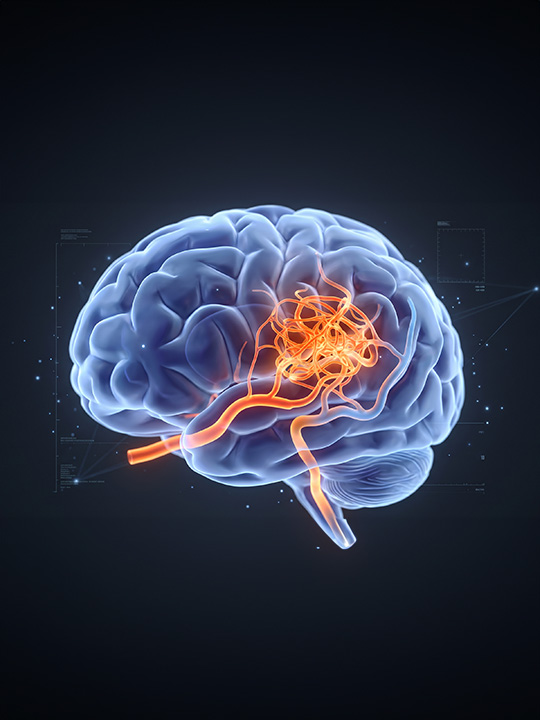
A brain arteriovenous malformation, or AVM, is a rare abnormal connection between arteries and veins, without the normal intervening capillary network. This creates abnormal blood flow, altered pressure, and disrupted cerebral hemodynamics.
Brain AVMs affect approximately 1–2 people per 100,000 person-years. Although rare, they are among the most important causes of intracranial hemorrhage in younger patients. The annual risk of rupture is commonly estimated at approximately 1–4% per year, but risk varies between patients. Previous hemorrhage, deep location, venous drainage pattern, venous stenosis, associated aneurysms, AVM size, and hemodynamic features may all influence hemorrhagic risk.
Management is individualized and may include observation, microsurgical resection, endovascular embolization, stereotactic radiosurgery, or combined strategies. The goal is not simply to remove or occlude an abnormal vessel network, but to prevent hemorrhage, preserve neurological function, reduce disability, and improve quality of life.
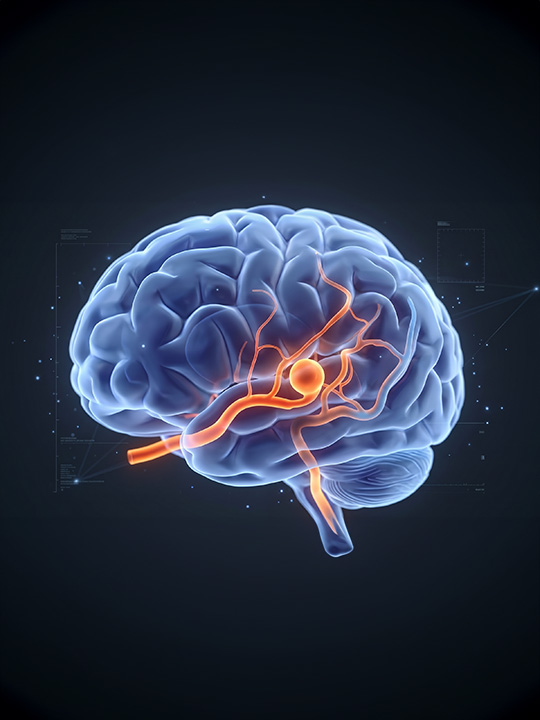
An intracranial aneurysm is a focal dilatation or ballooning of a cerebral artery caused by weakness of the vessel wall. Many aneurysms remain silent and are discovered incidentally. However, rupture can cause aneurysmal subarachnoid hemorrhage, one of the most severe emergencies in neurology and neurosurgery.
Intracranial aneurysms are present in approximately 2–3% of adults. Most never rupture, but aneurysmal subarachnoid hemorrhage occurs at an annual incidence of approximately 6–10 per 100,000 persons and carries high mortality and long-term disability. Reported 30-day mortality rates are approximately 35–45%, with significant cognitive and functional impairment among many survivors.
Aneurysm behavior is dynamic rather than static. Rupture risk is influenced by aneurysm size, location, morphology, growth, wall characteristics, smoking, hypertension, family history, age, sex, and other clinical factors. Treatment may include observation, microsurgical clipping, endovascular coiling, stent-assisted techniques, flow diversion, or combined strategies. The best approach depends on individualized risk assessment and multidisciplinary neurovascular expertise.
Stroke is one of the leading causes of death and disability worldwide. It may result from blockage of a blood vessel, causing ischemic stroke, or from rupture of a vessel, causing intracerebral hemorrhage or subarachnoid hemorrhage.
In 2021, there were approximately 11.9 million new strokes and 93.8 million people living after stroke worldwide. Stroke caused approximately 7.3 million deaths and 160.5 million disability-adjusted life years globally, making it one of the most important public-health challenges in modern medicine.
Stroke prevention, early recognition, rapid diagnosis, acute treatment, neurocritical care, rehabilitation, and long-term reintegration are all essential. Reducing stroke burden requires coordinated action across public awareness, vascular risk-factor control, emergency systems, hospital infrastructure, specialized neurovascular care, and rehabilitation networks.
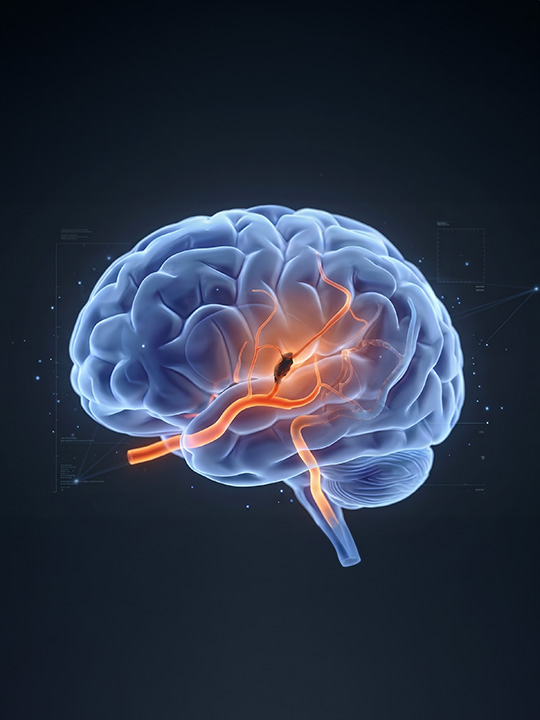
Vascular complications are also important beyond primary neurovascular diseases. Patients with brain tumors and skull base tumors may suffer not only from the disease itself, but also from vascular complications related to the tumor, the surgical approach, or the treatment required.
In brain tumor surgery, postoperative ischemia and infarction may occur around the resection cavity. In a large cohort of diffuse glioma operations, postoperative MRI showed peritumoral infarctions in 44% of operations. These infarctions were usually small, but their clinical impact depends strongly on location, particularly when they involve eloquent brain networks responsible for movement, language, cognition, or vision.
In skull base tumor surgery, tumors may surround, narrow, displace, or adhere to critical arteries, veins, perforators, venous sinuses, and cranial nerves. In a retrospective cohort of 266 skull base tumor resections, ischemic cerebrovascular complications occurred in 19.9% of patients. Vascular encasement, difficult hemostasis, tumor location, extent of resection, and subarachnoid hemorrhage were associated with increased vascular risk.
Endoscopic endonasal and transsphenoidal surgery also carry specific neurovascular risks. Internal carotid artery injury is rare, but it is one of the most feared complications of endoscopic skull base surgery. It can lead to massive hemorrhage, stroke, cranial nerve injury, pseudoaneurysm, carotid-cavernous fistula, or death.
These examples show why vascular safety is fundamental across neurosurgery. Improving outcomes requires more than treating aneurysms, AVMs, and stroke. It also requires preventing vascular injury during brain tumor and skull base surgery, recognizing high-risk anatomy, developing better imaging and prediction tools, strengthening surgical training, supporting modern infrastructure, and building coordinated neurovascular rescue pathways.
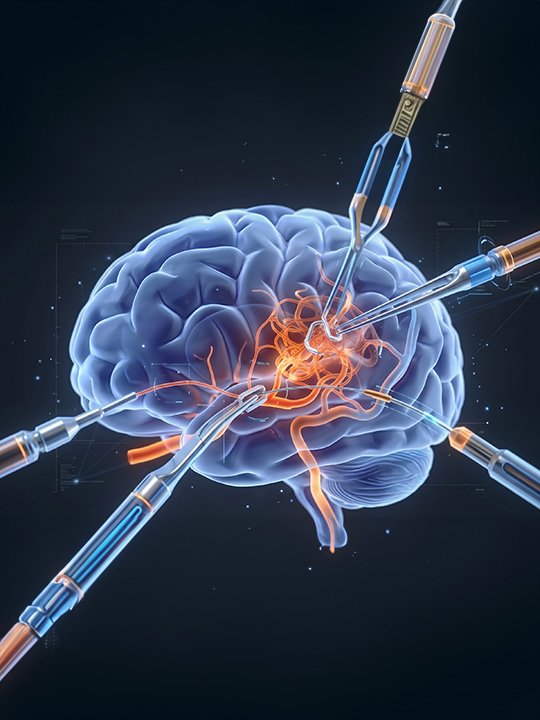
- There remains a substantial gap in public awareness regarding neurovascular, neurological, and neurosurgical conditions.
- Healthcare professionals require continuous access to up-to-date training, education, and scientific information in prevention, diagnosis, treatment, rehabilitation, and vascular safety in complex neurosurgery.
- Many healthcare systems face shortages of modern facilities, specialized personnel, technical equipment, structured long-term training programs, advanced imaging, neurocritical care resources, rehabilitation pathways, and endovascular rescue capabilities.
- There is a need for coordinated teams, long-term planning, and sustainable strategies to support organizational, educational, clinical, and funding-related decisions.
- Closer communication with public health authorities, academic institutions, hospitals, and civil society is essential in order to accelerate and scale up critical interventions.